Perovskite-Silicon Tandem Solar Cell Hits Record 30.77% Efficiency
A post-deposition healing treatment produces conformal crystal grains on industrial textured silicon, with 3,400 hours of stable operation.
3 min read
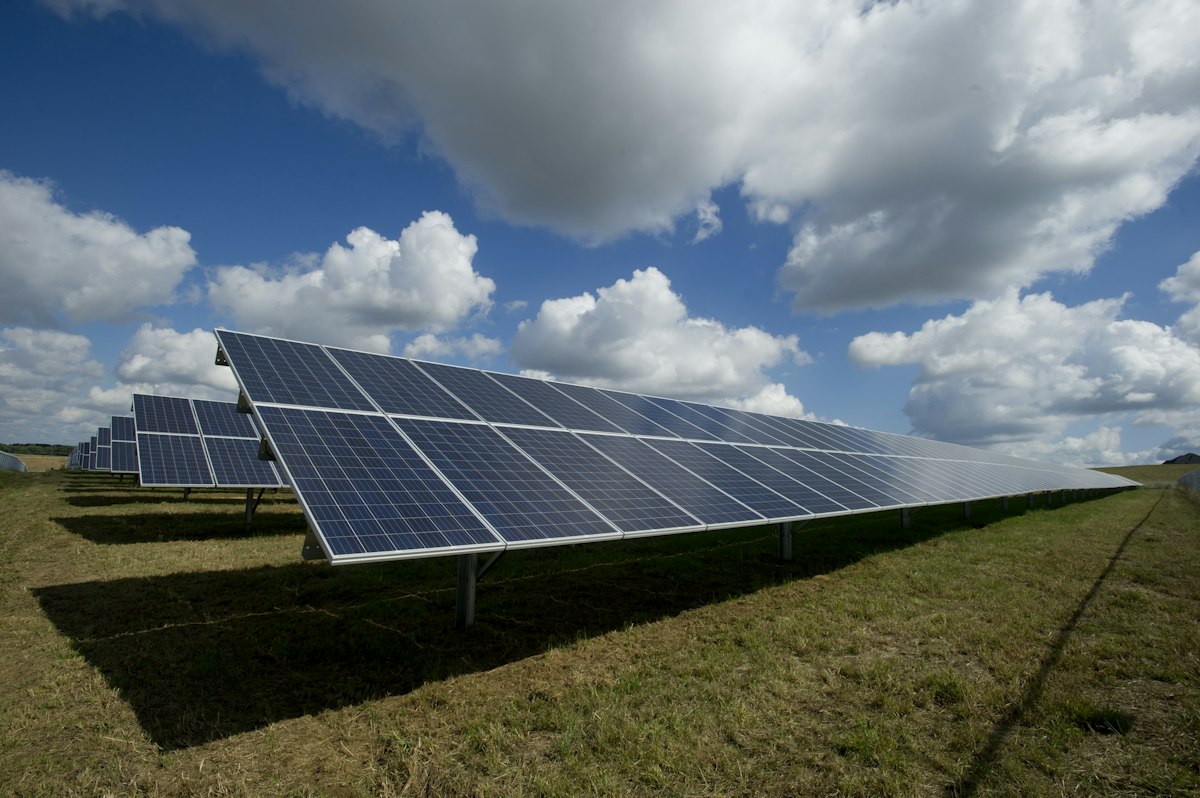
A team spanning Nanjing University, RenShine Solar, Yunnan University, Uppsala University, and the Zhejiang Provincial Innovation Center has achieved a certified 30.77% efficiency for a perovskite-silicon tandem solar cell — using a post-deposition "healing" treatment that solves a manufacturing challenge which has limited commercial viability.
The result, reported October 2, 2026, pushes tandem cells closer to the efficiency thresholds needed for mass production on existing silicon manufacturing lines.
The manufacturing problem
Industrial silicon wafers are textured with microscopic pyramids — typically 1-5 micrometers tall — to trap light and improve absorption. Perovskite films deposited on this textured surface tend to form with grain boundaries and incomplete coverage, creating non-radiative recombination losses that cap efficiency.
Previous approaches mixed additives into deposition solutions. Results were inconsistent on textured surfaces at production scale.
The healing solution
The team's approach applies methylammonium thiocyanate (MASCN) solution to the perovskite film after it has already formed — a post-deposition step rather than a deposition additive.
The treatment triggers secondary crystal growth through Ostwald ripening, producing large, conformal columnar grains extending through the full film thickness. Grain boundaries that drive efficiency losses are largely eliminated.
The mechanism was traced using in-situ SEM, XRD, and photoluminescence measurements, alongside COMSOL simulations of how the treatment solution penetrates the underlying film.
Performance results
Applied to a 1.68 eV wide-bandgap perovskite top cell on a silicon heterojunction bottom cell:
- Single-junction perovskite champion efficiency: 21.1%
- Tandem device certified at 30.77% over 1.164 cm² active area
- Voc: 1.915 V
- Jsc: 20.13 mA/cm²
- FF: 79.85%
- Negligible hysteresis
Stability testing showed equally impressive results. An encapsulated tandem cell maintained its initial 28.4% efficiency after 3,400 hours of continuous operation at maximum power point under one-sun illumination in ambient air. The researchers describe this as the best stability reported to date for a perovskite/silicon tandem cell.
Why this matters
Silicon solar cells have approached their theoretical efficiency limits. Tandem architectures — pairing silicon with a perovskite top cell that absorbs complementary wavelengths — offer a path to higher efficiency without abandoning existing manufacturing infrastructure.
The 30% efficiency threshold is psychologically and economically significant. It demonstrates that perovskite tandems can outperform the best single-junction silicon cells while using healing treatments compatible with textured wafers already in production.
Path to commercialization
Certified efficiency on a small active area is a laboratory achievement. Scaling to full wafers, maintaining stability over 25-year operational lifetimes, and manufacturing at gigawatt scale remain engineering challenges.
But the healing treatment addresses a specific, well-defined manufacturing bottleneck. Companies like RenShine Solar's involvement suggests commercial interest beyond academic publication.
The energy transition context
Solar efficiency gains compound across the global installed base. A few percentage points at the cell level translates to meaningfully more electricity from the same panel area — reducing land use, installation costs, and balance-of-system expenses.
October 2026's record is a data point in a trajectory. If stability results hold at scale, perovskite-silicon tandems could become the dominant solar architecture within a decade.







Comments
Loading comments…