Meta's Prometheus Supercluster Trained Muse Models on Gigawatt-Scale Ohio Infrastructure
Meta's New Albany, Ohio Prometheus site is live at roughly 562 MW toward a million-GPU vision, liquid-cooled racks training Muse and Wonder on institutional-scale power.
7 min read
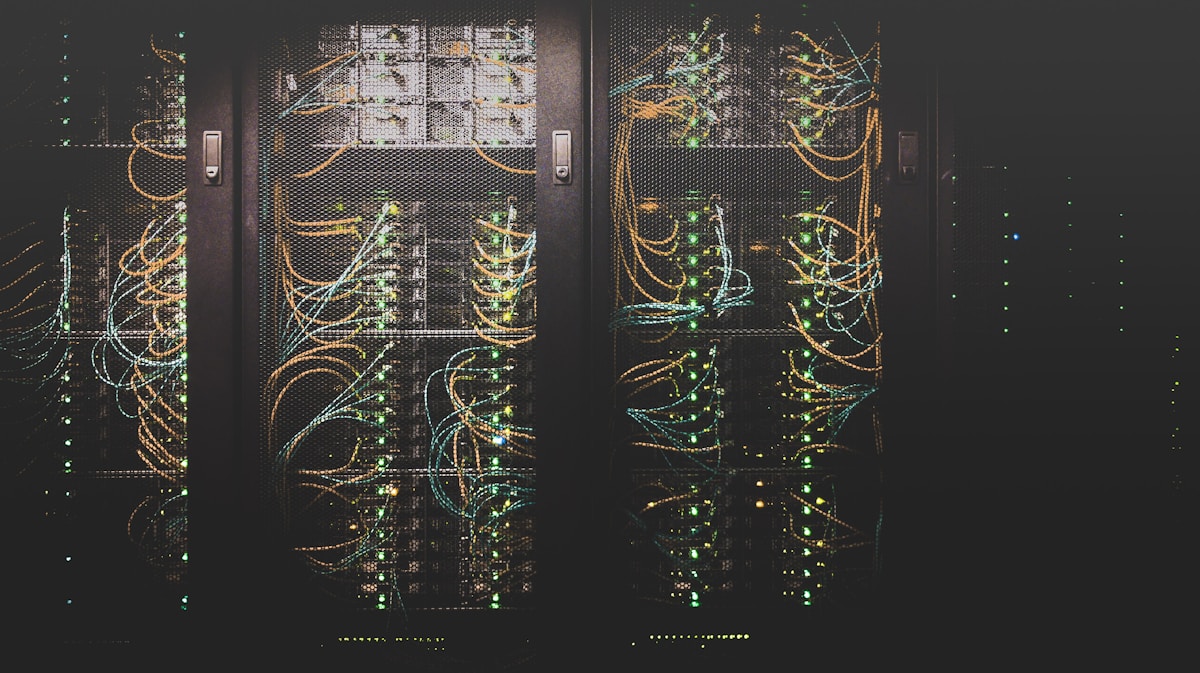
Ohio farmland turned compute continent
Meta disclosed progress on Project Prometheus, a supercluster data center campus in New Albany, Ohio, in October 2026 reporting that described roughly five hundred sixty-two megawatts already live toward a gigawatt-scale vision supporting on the order of one million GPUs over time. Liquid cooling, high-voltage power delivery, and custom building footprints distinguish the site from traditional enterprise colocation. Prometheus trains Meta's Muse family of models and related Wonder research efforts that underpin social ranking, advertising, and generative features across Facebook, Instagram, and WhatsApp.
For science and infrastructure readers, Prometheus is a case study in how hyperscalers convert land and grid capacity into model capability—a physical layer often obscured by API announcements.
Muse, Wonder, and the product surface
Muse models power recommendation, content understanding, and emerging generative editing inside Meta apps. Wonder naming denotes longer-horizon research models testing architectures not yet deployed broadly. Training at Prometheus scale implies trillion-token runs mixing text, images, and video from user-generated content under privacy and consent frameworks Meta describes in policy papers—controversial among regulators.
Competitive pressure from OpenAI's GPT-6 rumors and Google's Gemini clusters justifies capital expenditure even when investor questions about metaverse ROI linger.
Power, cooling, and sustainability tensions
Five hundred sixty-two megawatts live is comparable to small cities' peak load. Meta negotiates with AEP Ohio and regional authorities on interconnect queues that delay many data center projects nationwide. Liquid cooling improves power usage effectiveness for dense GPU racks but consumes water and complicates maintenance. Environmental groups in Franklin County monitor discharge permits and noise.
Meta publishes renewable energy credits and onsite solar where feasible; skeptics note credits do not always equal local zero-carbon hour-by-hour matching.
One million GPU ambition
The one-million-GPU figure is roadmap rhetoric as much as inventory count—includes failures, spares, and heterogeneous accelerators across training and inference. Still, it signals intent to rival Microsoft and Amazon training footprints. GPU generation mix likely spans NVIDIA Blackwell-class parts and Meta's internal ASIC explorations referenced in prior earnings calls.
Supply chain lead times mean Prometheus ramps in waves; five hundred sixty-two megawatts suggests tens of thousands of chips active, not a million yet.
New Albany and economic development
New Albany offered tax incentives and infrastructure upgrades to attract Meta alongside Intel's nearby fab projects. Local jobs split between construction, facilities, and a smaller cohort of high-skilled ML engineers relocated from coasts. Housing markets feel pressure; school districts plan for population inflows.
Community boards debate whether data centers benefit residents who do not work in tech—a recurring theme in America's AI geography.
Liquid cooling engineering
Direct-to-chip liquid cooling loops remove heat faster than air, enabling higher rack densities critical for transformer training efficiency. Failover plumbing, leak detection, and earthquake-resistant mounting—less relevant in Ohio than California—still appear in engineering specs. Facilities teams cross-train between Prometheus and Meta's other U.S. sites in Utah and Texas.
Science implications for model research
Researchers gain access to unprecedented contiguous GPU pools for ablation studies, multimodal fusion, and safety evaluations at scale. Internal papers may lag OpenAI and Anthropic public releases, but academic partnerships through FAIR benefit from cluster time grants.
Open science advocates criticize limited public detail on energy per training run; Meta may respond with sustainability reports tied to Prometheus milestones.
Reliability and grid risk
Concentrating load in one campus creates single-point-of-failure risk for training jobs measured in weeks. Meta likely mirrors checkpoints across geographies and maintains backup power. Grid outages during Ohio storms could delay model releases—operational details rarely public until incidents occur.
Comparison to Anthropic and OpenAI infrastructure
Anthropic's EverWind Nova Scotia project and OpenAI's Microsoft-hosted clusters compete for power interconnect slots. Prometheus advantages include Meta-owned land and integrated product feedback loops—models ship to billions of users without third-party cloud margins.
JSIPE readership lens
Science policy readers should connect Prometheus to U.S. competitiveness debates: CHIPS Act fab investments plus AI data centers form a dual hardware-software stack. Export controls on GPUs to China make domestic clusters strategically salient.
Workforce and skills
Operating gigawatt campuses requires electricians, HVAC specialists, and ML systems engineers comfortable with Slurm, Kubernetes, and bespoke orchestrators. Community colleges partner on training pipelines—a social science angle on AI inequality.
Water and climate adaptation
Midwest drought cycles occasionally stress water sources for cooling make-up. Meta may invest in closed-loop systems and aquifer monitoring. Climate activists file public comments on expansion permits.
Security and physical access
Campuses are high-security targets for espionage and sabotage. Background checks, perimeter controls, and insider threat programs mirror defense facilities lite. Model weights exfiltration fears drive air-gapped staging areas.
Future expansion phases
Permits filed suggest additional buildings beyond initial tranches. Meta's capital expenditure guidance in earnings calls will reflect Prometheus burn rate. Investors accept lower near-term margins if ad targeting improves from better Muse models.
Interconnection with Meta's open-source strategy
Llama releases consume fewer internal GPUs for inference but training still demands Prometheus-scale pools for flagship sizes. Open weights strategy trades some proprietary advantage for ecosystem goodwill and regulatory goodwill in Europe.
Research ethics and content moderation
Training on user posts raises ethical review board questions inside Meta. Prometheus enables finer moderation models detecting hate speech and CSAM, but also surveillance concerns in fragile democracies where Meta operates.
Synthesis
Meta's Prometheus supercluster in New Albany, Ohio—about five hundred sixty-two megawatts live toward gigawatt-scale, liquid-cooled, million-GPU ambition—trains Muse and Wonder models that power products touching billions of people. It is science infrastructure at civilizational scale, embedded in cornfield geography and grid politics.
Understanding AI capability requires looking past model cards to megawatts in Ohio. Prometheus is where Meta bets that physical scale still wins races that headlines attribute only to algorithms.
Fiber backhaul and networking inside the campus
Gigawatt-scale training is not only about GPUs; it is about moving tensors between racks without microseconds becoming milliseconds. Meta engineers discussed in industry forums how Prometheus uses high-radix switches and custom topologies to keep all-to-all communication patterns feasible for large transformer training. Packet loss during a week-long run can waste millions in electricity; networking teams therefore share prestige with ML researchers on campus tours.
Disaster recovery and checkpoint strategy
Training runs for Muse-class models checkpoint periodically to distributed storage mirrored offsite. Prometheus likely feeds checkpoints to other regions so a localized fire or grid failure does not erase months of progress. The science of choosing checkpoint frequency trades storage costs against risk—decisions made in Ohio war rooms affect product launch dates consumers see only as app updates.
Local politics and permit fights
Franklin County residents attend zoning hearings on noise, traffic, and light pollution from twenty-four-seven operations. Meta's community benefit agreements—school STEM funding, infrastructure upgrades—are negotiated in public. October 2026 reporting on five hundred sixty-two megawatts live will embolden both supporters citing jobs and opponents citing climate. Science infrastructure is never purely technical; it is civic.
Benchmarking against national AI strategies
U.S. policymakers comparing domestic clusters to foreign rivals will cite Prometheus alongside Department of Energy supercomputers and private clouds. Export controls mean not every country can replicate the stack; Ohio becomes a strategic asset in speeches about AI leadership, whether or not voters in New Albany asked for that role.
What researchers want published
Academic partners will push Meta to release energy-per-model metrics, hardware utilization curves, and failure rates—data that advances science but reveals competitive detail. October's milestone may produce a technical blog post with glossy photos more than raw numbers; pressure for transparency will continue from journals and EU AI Act disclosure debates.


Comments
Loading comments…