Anthropic Gas Turbine Deal Shows AI Power Is Now a Procurement War
Reports on November 8–9, 2026, put Anthropic's gas-generator orders near $3.4 billion—a signal that frontier labs compete on electrons, not just GPUs.
9 min read
From chips to turbines
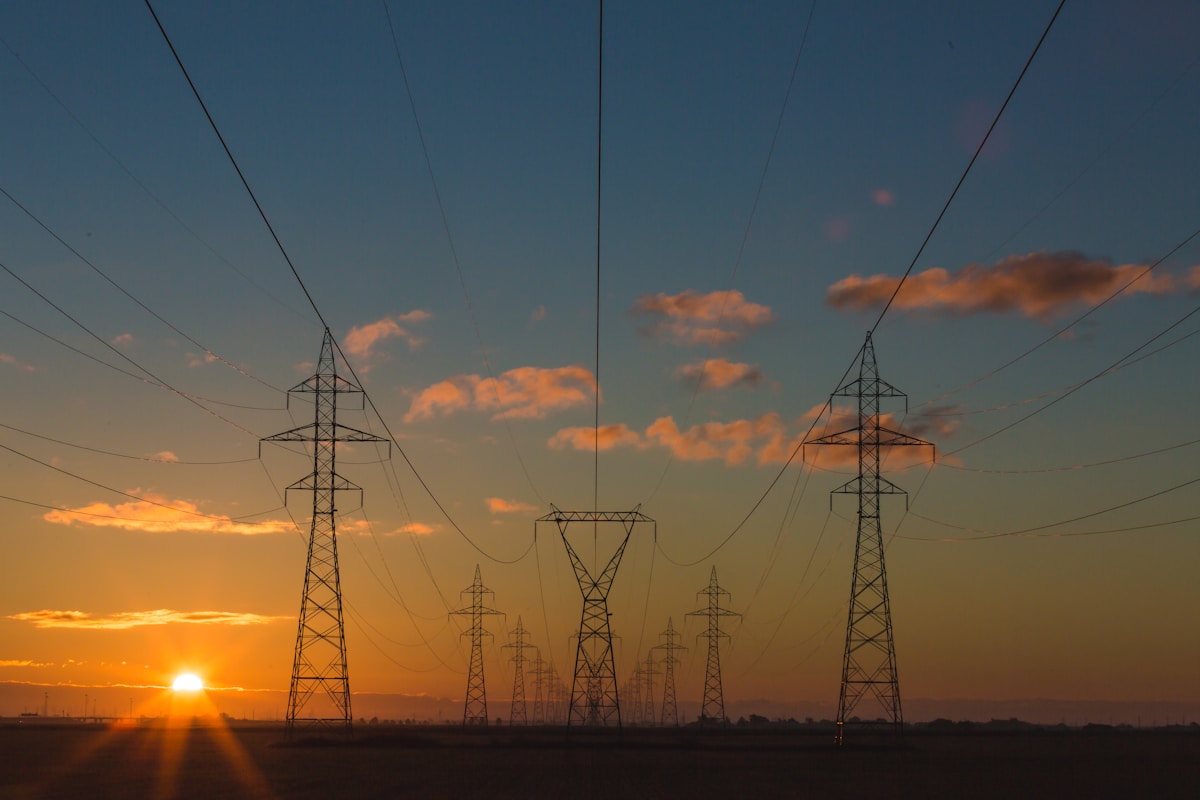
Frontier artificial intelligence used to be a story about who secured the most H100s. By November 2026, the bottleneck narrative includes substations, gas turbines, and gigawatts of dependable power. The Financial Times and follow-on coverage reported that Anthropic structured roughly $3.4 billion of orders for gas-powered generators capable of delivering on the order of 1.7 gigawatts, taking over existing contracts from Texas-based OnePWR Solutions rather than acquiring the company outright.
The deal reportedly closed in September 2026 but became public on November 8, a timing pattern common in infrastructure: equipment lead times are long, disclosures lag signatures, and markets react when journalists connect dots across SEC filings, energy permits, and supplier press releases. For science and engineering audiences, the number is less important than the unit: labs now contract for utility-scale generation the way hyperscalers once contracted for entire fab lines.
Natural gas is politically fraught but grid-pragmatic. Wind and solar buildouts continue, yet training clusters and inference campuses that cannot tolerate multi-hour curtailing still want thermal backup. Anthropic's purchase joins a broader 'AI natural gas frenzy' that includes other hyperscalers signing colocation deals near cheap molecules. Expect public debate about methane emissions, carbon accounting, and whether clean-power purchase agreements actually match physical electrons.
Why 1.7 gigawatts is not an abstract statistic
One point seven gigawatts is roughly the capacity of a large nuclear plant or two mid-size combined-cycle gas plants. It is not what you buy to run a single rack; it is what you buy when you believe model scale will compound for a decade and you refuse to be curtailed during a summer heat wave. Engineers should translate gigawatts into cooling loads, water rights, and interconnection queues at the regional transmission organization level.
Generator orders also imply land and permitting pipelines. Turbines must arrive, sit on foundations, connect to switchgear, and synchronize with the grid. Supply-chain delays in heavy manufacturing rival semiconductor fab delays. A lab that announces a model splash in November may have locked power five quarters earlier.
For universities and national labs, the lesson is partnership risk. If private AI campuses monopolize local interconnection capacity, academic clusters waiting in the same queue see timelines slip. Policymakers may need separate planning zones for 'AI energy parks' versus general industrial load.
Economics versus renewables pledges
Every frontier lab publishes sustainability commitments, yet dispatchable gas still underwrites uptime for revenue-bearing inference. Critics will call that hypocrisy; operators call it physics. Batteries smooth minutes, not weeks. Until long-duration storage or advanced nuclear hits price points competitive with combined-cycle gas at scale, molecules remain the default insurance policy.
Corporate buyers may structure offsets or book renewable energy certificates, but journalists and regulators increasingly ask for hourly matching data. Anthropic's turbine story will feed into hearings about whether AI growth undermines grid decarbonization timelines. Engineers should document efficiency gains per watt—better algorithms, distillation, speculative decoding—so the industry can argue it earns the power it draws.
Investors valuing AI labs as software multiples may need to capitalize energy assets like industrials. Discounted cash flow models that ignore fuel pass-through risk will misprice margin when gas spikes.
Geography: Texas and beyond
OnePWR's Texas footprint is no accident. ERCOT's market design, land availability, and pipeline density attract energy-hungry campuses. Yet political fights over grid reliability after Winter Storm Uri still echo. Community opposition to new gas peakers near data center alleys is growing in Virginia and Ohio as well.
International expansion repeats the pattern: regions with cheap power and permissive permitting win training jobs; expensive grids export inference. Science diplomats should note that energy diplomacy now overlaps AI diplomacy—countries offering stable baseload become model hosts.
Workforce implications are huge. Turbine maintenance, high-voltage safety, and emissions monitoring require trades skills that computer science departments do not produce. Joint training programs between utilities and AI operators may become as common as GPU CUDA bootcamps.
Research integrity and uptime
Scientists running months-long simulations on shared clusters care about uncorrelated downtime. If a lab's private microgrid rides through a brownout while a university HPC center throttles, comparative research outputs skew. Funding agencies may ask grant applicants to disclose power provenance and outage statistics.
Long-horizon experiments—climate ensembles, particle physics simulations—already compete with AI for queue priority. Transparent scheduling and carbon-aware batching could ease tensions without pretending workloads are identical.
Reliability engineering textbooks will add AI load profiles: bursty training all-reduce phases, steady inference QPS, and sudden agent sandbox spikes. Generator sizing must cover harmonic loads from variable-frequency drives in cooling plants, not just IT nameplate watts.
What students and policy readers should remember
The Anthropic turbine orders are a datum, not a moral verdict. They show that scaling laws collided with grid physics. Any serious climate and innovation policy must model AI as both a demand shock and a potential optimizer of other sectors.
If you are choosing a career path, power systems engineering just became sexy again. The prettiest model architecture fails if the breaker trips.
Watch follow-on disclosures from regulators about permitting fast lanes for 'strategic AI infrastructure.' The November 2026 news cycle is the beginning of public accounting, not the end.
Additional context and what comes next
Markets and product teams rarely digest more than one structural shift per quarter, yet the November 9, 2026, news cycle stacked several at once. That compression matters for how you prioritize reading time: separate durable infrastructure changes—power contracts, new silicon SKUs, marketplace procurement paths—from sentiment trades that can reverse in a session. Teams that confuse the two over-rotate headlines into roadmap thrash.
If you operate a content or commerce site, treat each development as a hypothesis to test rather than a slogan to paste into your homepage hero. Run small experiments: measure completion rates on agent-assisted workflows, log model routing costs per user story, or track whether crypto-aware landing pages convert differently on days when AI equities wobble. Evidence from your own funnel beats generic hot takes within a week.
Policy timelines will lag product timelines. A Treasury order, a watermark default, or a bipartisan guardrails quote does not instantly change API terms, but it changes enterprise security questionnaires within days. Update your standard responses now so sales engineers are not improvising compliance language on live calls. Legal review is a bottleneck; feed it early drafts grounded in primary sources.
For individual practitioners, the practical skill is calendar discipline. Block time to read primary announcements—Anthropic's system card, Google's TPU blog, OpenAI's marketplace page, FinCEN's order summary, xAI's API docs—before reading commentators. Primary text is drier but saves you from repeating errors that spread when summaries compress nuance into punchlines.
Finally, remember distribution fairness across your own portfolio of projects. Not every brand should chase the same keyword cluster on the same morning. Rotate angles: infrastructure for engineering readers, compliance for operators, culture lenses for general audiences. That rotation keeps audiences loyal when algorithms reward freshness without rewarding sameness.
Deeper implications for builders and investors
Investors grading AI companies in late 2026 increasingly ask for unit economics broken out by workload type: training, batch inference, interactive chat, and agent loops each carry different margin profiles. News about cheaper frontier tokens or more efficient small models is therefore margin news, not just capability news. If your diligence template still uses a single “cost per query” field, expand it.
Builders shipping on third-party APIs should implement dual-vendor routing where contracts allow. The week of November 9 demonstrated that labs ship on the same calendar day; outages, price changes, or policy shifts will also cluster. Abstract your orchestration layer so swapping execution models does not require rewriting business logic.
Cyber and fraud teams should coordinate with marketing when AI-generated content scales. Watermarks, logging, and disclosure norms are becoming part of brand safety packages, not optional IT experiments. Run tabletop exercises where a viral post turns out to be partially machine-drafted and your comms team needs a playbook.
Long-horizon researchers should archive primary sources from days like this for longitudinal studies. How fast did prices move? Which claims were revised? Which partnerships materialized versus vaporware? Today’s hectic stream is tomorrow’s dataset for science and technology policy dissertations.
Community managers and educators play a translation role. Many readers feel overwhelmed by overlapping launches. Curate learning paths: one explainer on power, one on small models, one on markets—rather than a single megathread that loses everyone after the third acronym.
Operational leaders should schedule “news debt” paydown sessions. When headlines outpace documentation, internal wikis lie. Assign owners to update runbooks after major releases so institutional knowledge matches Twitter speed.
Ethics committees and journalism schools will use November 2026 as a case study in simultaneous release journalism. Study what held up after a week versus what needed correction. That meta-lesson trains critical thinking better than any single product review.
Retail participants in crypto should revisit position sizing rules after correlation shocks. If your thesis requires bitcoin to rally with stocks on green days, November 9 challenged that thesis without needing a multi-year bear market narrative. Adjust models or accept the behavioral stress of asymmetric beta.
Enterprise architects should map dependencies: which features rely on which cloud marketplace, which model id, which power region. Dependency graphs reveal fragility faster than architecture slide decks.
Teachers integrating AI into coursework should assign students to compare vendor claims to independent replication attempts, even if replications fail. The pedagogical win is skepticism with rigor, not cynicism without evidence.
Healthcare and public-sector IT leaders must triage which AI tools belong in HIPAA or FedRAMP paths first. Marketplace listings do not erase segmentation work; they may accelerate demand before segmentation is ready.
Small businesses without dedicated AI teams benefit from managed templates: approved prompts, approved tools, monthly office hours. Democratization does not mean everyone becomes a prompt engineer overnight.
Writers and editors should negotiate credit and disclosure standards with clients before deadlines loom. Retroactive disclosure fights destroy trust faster than slow publishing.
If you manage open-source libraries, expect more agent-generated pull requests. Define maintainer policies for AI assistance, test coverage, and security review before burnout spikes.
Urban planners near data center corridors should expect community meetings to cite turbine and TPU headlines. Translate technical stories into local environmental and jobs language.
Parents discussing AI with teens can use memory and watermark stories as hooks for conversations about digital footprints—more engaging than abstract privacy lectures.
None of these follow-ups replace the specific story above; they connect it to the work you already own. That is how a hectic news morning becomes an asset instead of anxiety.




Comments
Loading comments…